Q: What are the latest innovative billboard trends in India?
Innovative billboards in India now feature 3D designs, digital displays, and interactive elements transforming outdoor advertising across major Indian cities. These advanced formats include motion-sensor technology, augmented reality integrations, and dynamic content rotation, offering engagement rates 40-60% higher than traditional static hoardings, according to Shubindia Ad Works.
Exploring Innovative Billboards in India: Trends and Impact
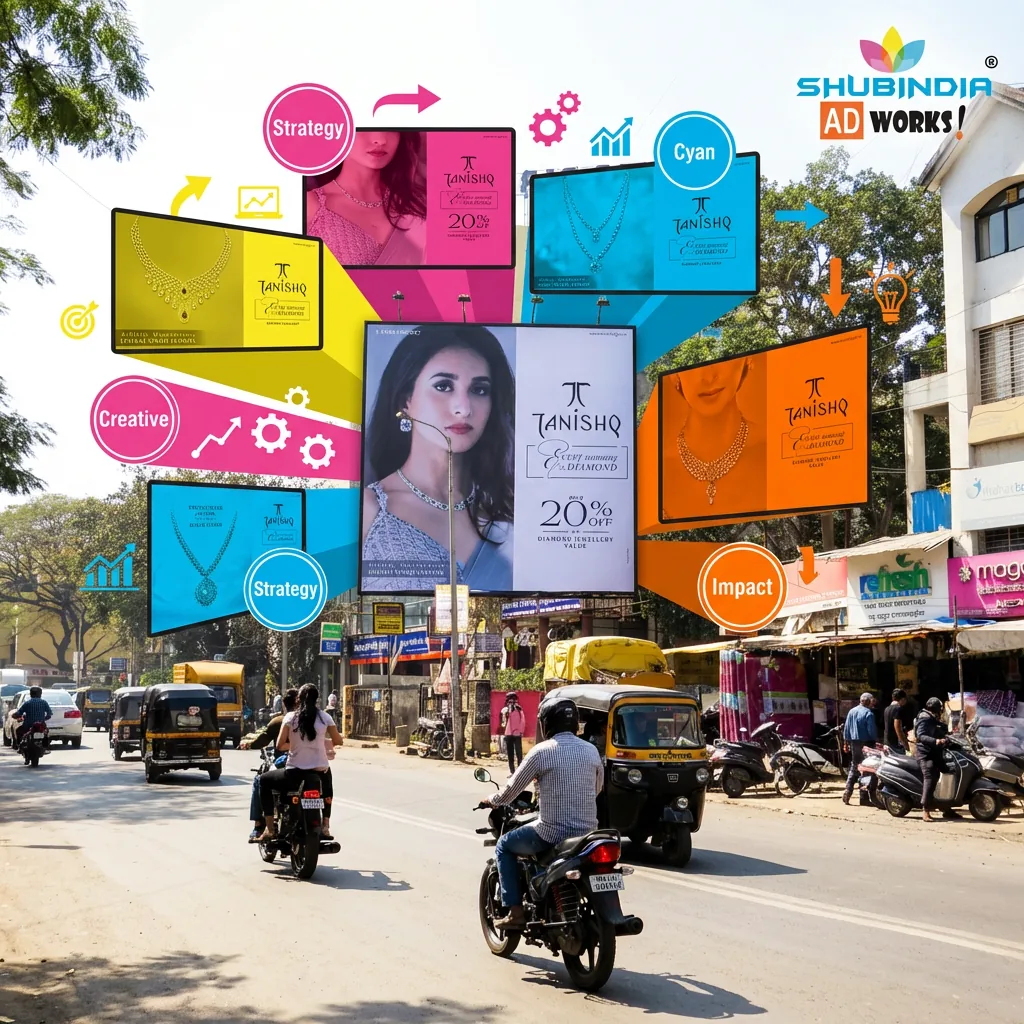
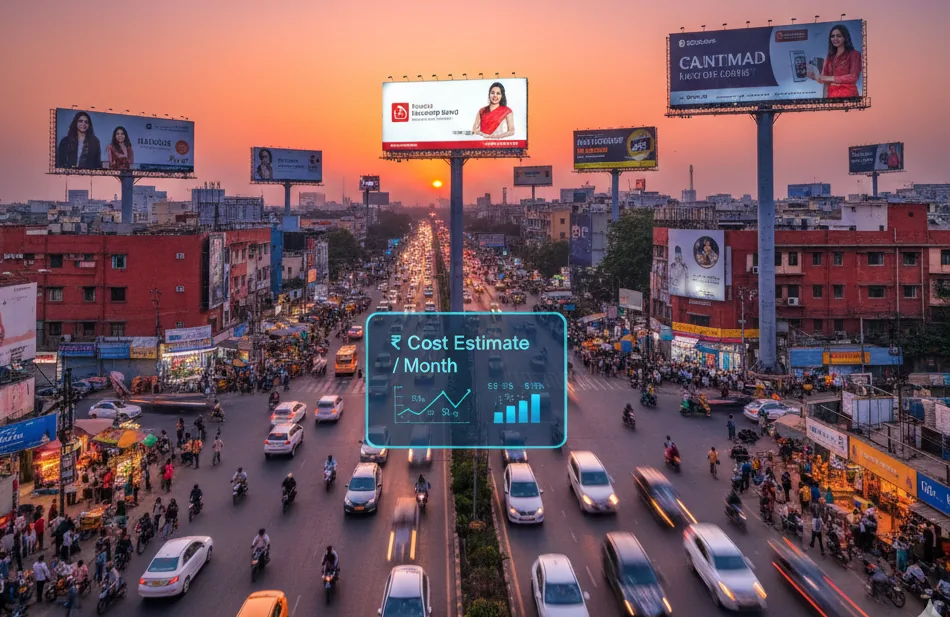
Discover the vibrant world of innovative billboards in India. From 3D anamorphic displays to AR-enhanced digital screens, explore how creativity meets technology in transforming urban landscapes and marketing strategies across Indian cities.
The Evolution of Billboard Advertising in India
Billboard advertising in India has a rich history that traces back to the early 20th century. Initially, billboards were simple, hand-painted signs that conveyed straightforward messages. These early advertisements were primarily text-based and relied heavily on typography to attract the attention of passersby. The primary focus was on delivering a clear and concise message, often promoting local businesses, events, or products. Over time, as the urban landscape evolved and the population grew, billboards became a more integral part of the advertising ecosystem.
As technology advanced, so did the sophistication of billboard advertising. The introduction of lithography allowed for more elaborate and colourful designs, making billboards more visually appealing. By the mid-20th century, billboards were no longer just static displays; they began to feature more dynamic elements, such as lights and moving parts. This evolution was driven by the need to capture the attention of an increasingly distracted and mobile audience. The 1980s and 1990s saw the introduction of backlit billboards and the use of vinyl materials, which allowed for more vibrant and durable advertisements.
The advent of digital technology in the 21st century marked a significant turning point in the evolution of billboard advertising. Digital billboards, which can change displays multiple times a day, offered unprecedented flexibility and immediacy. These digital displays not only allowed for more creative and interactive advertisements but also enabled real-time updates, making them a powerful tool for marketers. The evolution of billboard advertising in India reflects broader trends in technology and consumer behaviour, making it a fascinating area of study for marketers and urban planners alike.
Current Trends in Innovative Billboard Designs
In recent years, billboard designs in India have become increasingly innovative and creative. One of the most notable trends is the use of 3D elements to create a more immersive and engaging experience. These 3D billboards often extend beyond the traditional rectangular frame, creating a sense of depth and realism that captures the viewer's attention. For example, a billboard advertising a new car might feature a 3D model of the vehicle that appears to be driving out of the billboard. This type of design not only grabs attention but also leaves a lasting impression on the viewer.
Another trend that has gained traction is the use of interactive billboards. These billboards invite viewers to engage with the advertisement in some way, often through the use of touchscreens or mobile apps. For instance, a billboard for a new smartphone might allow passersby to interact with a digital version of the phone, exploring its features and functionalities. This level of interactivity not only makes the advertisement more engaging but also provides valuable data on consumer preferences and behaviours.
Sustainability has also become a key consideration in billboard design. Many companies are now opting for eco-friendly materials and energy-efficient lighting solutions in their billboards. Some innovative billboards even incorporate renewable energy sources, such as solar panels, to power their displays. This shift towards sustainability is not only environmentally responsible but also resonates with a growing segment of consumers who prioritise eco-friendly products and practices. As a result, these billboards often garner positive attention and reinforce the brand's commitment to sustainability.
Technological Advancements Shaping Billboard Advertising
Technological advancements have revolutionised billboard advertising, making it more dynamic, interactive, and data-driven. One of the most significant advancements is the integration of LED technology. LED billboards offer several advantages over traditional billboards, including higher brightness, better colour accuracy, and lower energy consumption. These features make LED billboards particularly effective at capturing attention, even in bright daylight or adverse weather conditions. Additionally, LED technology allows for more flexible and creative designs, enabling advertisers to experiment with animations and dynamic content.
Another game-changing technology in billboard advertising is the use of augmented reality (AR). AR-enhanced billboards provide an interactive experience that merges the physical and digital worlds. For example, a billboard for a fashion brand might allow viewers to use their smartphones to see how different outfits would look on them, simply by pointing their cameras at the billboard. This level of interactivity not only enhances engagement but also provides a unique and memorable experience for the consumer. AR technology is still in its early stages, but its potential for revolutionising billboard advertising is immense.
Data analytics is another area where technology has made a significant impact. Modern billboards are often equipped with sensors and cameras that collect data on viewer demographics, engagement levels, and even emotional responses. This data is then analysed to optimise the effectiveness of the advertisement. For instance, if a particular billboard is not attracting the expected level of engagement, the content can be adjusted in real time to better resonate with the target audience. This data-driven approach allows for more personalised and effective advertising campaigns, maximising the return on investment for advertisers.
The Role of Digital Billboards in Urban Landscapes
Digital billboards have become a prominent feature in urban landscapes across India, transforming the way advertisements are displayed and consumed. These billboards offer a level of flexibility and immediacy that traditional billboards simply cannot match. For instance, digital billboards can display multiple advertisements in a single location, rotating through different messages at set intervals. This not only maximises the use of available space but also allows advertisers to target different audiences at different times of the day. A digital billboard near a busy office district might display advertisements for coffee in the morning and dining options in the evening.
The integration of digital billboards into urban landscapes also offers several logistical advantages. Traditional billboards require physical labour and time to change, whereas digital billboards can be updated remotely in a matter of seconds. This capability is particularly useful for time-sensitive campaigns, such as promotions for limited-time offers or events. Additionally, digital billboards can be programmed to display real-time information, such as weather updates, traffic conditions, or news headlines, making them a valuable resource for commuters and pedestrians.
However, the proliferation of digital billboards also raises questions about visual pollution and regulatory compliance. Urban planners and local governments are increasingly concerned about the impact of digital billboards on the aesthetic quality of public spaces. To address these concerns, many cities have implemented guidelines on the placement, brightness, and content of digital billboards. These regulations aim to balance the commercial benefits of digital advertising with the need to maintain a visually pleasing urban environment. As digital billboards continue to evolve, their role in shaping urban landscapes will undoubtedly remain a topic of ongoing discussion and innovation.
Case Studies of Successful Billboard Campaigns in India
India has witnessed several successful billboard campaigns that have not only captured public attention but also set new benchmarks in creativity and effectiveness. One notable example is the "Ariel Share the Load" campaign. Launched by Procter & Gamble, this campaign aimed to address the issue of gender inequality in household chores. The billboards featured powerful visuals and messages that encouraged men to share the responsibility of laundry with women. The campaign was highly effective, generating significant media coverage and sparking widespread public discussion on gender roles within households.
Another successful campaign is the "Make in India" initiative launched by the Indian government. As part of this campaign, billboards were strategically placed in key business districts and transportation hubs to promote India as a global manufacturing hub. The billboards featured the iconic lion logo and emphasised India's strengths in various sectors, from automotive to information technology. The campaign not only boosted India's image as a favourable investment destination but also attracted substantial foreign direct investment, demonstrating the power of well-executed billboard advertising.
The "Fevicol Bus" campaign by Pidilite Industries is yet another example of innovative billboard advertising. To promote its adhesive product, Fevicol, the company created a billboard that featured a bus seemingly stuck to it. The visual illusion was so convincing and intriguing that it quickly became a talking point among the public. The campaign effectively communicated the product's strong adhesive qualities in a memorable and visually engaging manner. This case study highlights how creativity and innovation in billboard design can lead to high levels of consumer engagement and brand recall.
How Billboards Influence Consumer Behaviour
Billboards have a profound impact on consumer behaviour, influencing perceptions, attitudes, and purchasing decisions. One of the key advantages of billboard advertising is its ability to reach a broad audience. Unlike television or online ads, which can be skipped or blocked, billboards are an unavoidable part of the urban landscape. This constant visibility helps to reinforce brand messages and increase brand recall. Studies have shown that repeated exposure to billboard advertisements significantly enhances brand recognition and consumer recall, making them an effective tool for building brand awareness.
The location of a billboard plays a crucial role in its effectiveness. Billboards placed in high-traffic areas, such as busy intersections, highways, and shopping districts, have a higher likelihood of being seen by a large number of people. This high visibility translates into greater reach and impact. Additionally, the strategic placement of billboards can target specific demographics. For example, billboards near schools and colleges can effectively target students, while those near business districts can reach working professionals. This targeted approach ensures that the advertisement reaches the intended audience, increasing the likelihood of influencing consumer behaviour.
The design and content of a billboard also significantly impact consumer engagement. Billboards that feature eye-catching visuals, concise messages, and a clear call to action are more likely to capture attention and drive consumer behaviour. For instance, a billboard promoting a new restaurant might include mouth-watering images of the dishes, along with a simple message and directions to the location. This combination of visual appeal and clear information can entice viewers to visit the restaurant, demonstrating the effectiveness of well-designed billboard advertisements.
Regulatory Challenges and Guidelines for Billboard Advertising in India
Billboard advertising in India is subject to a complex web of regulations and guidelines aimed at ensuring public safety, aesthetic harmony, and ethical standards. One of the primary regulatory bodies overseeing billboard advertising is the Municipal Corporation, which sets guidelines on the placement, size, and content of billboards. These regulations are designed to prevent visual clutter and ensure that billboards do not obstruct views or pose safety hazards. For example, billboards near traffic signals are often restricted to prevent distractions that could lead to accidents. Compliance with these guidelines is mandatory, and violations can result in hefty fines or the removal of the billboard.
The Advertising Standards Council of India (ASCI) also plays a crucial role in regulating billboard advertising. The ASCI has established a code of conduct that outlines ethical standards for advertising content. This code prohibits misleading claims, offensive content, and advertisements that could harm public health or safety. For instance, billboards promoting tobacco or alcohol products are subject to strict regulations to minimise their impact on public health. Advertisers are required to ensure that their billboards comply with these ethical standards, and the ASCI has the authority to take action against those who violate the code.
In addition to national regulations, local governments often have their own specific guidelines for billboard advertising. These guidelines can vary significantly from one city to another, reflecting local priorities and concerns. For example, some cities may have restrictions on the use of digital billboards to prevent light pollution, while others may have guidelines on the use of certain colours or materials to maintain the aesthetic quality of public spaces. Navigating this complex regulatory landscape requires a thorough understanding of both national and local guidelines, making it essential for advertisers to work closely with regulatory authorities to ensure compliance and avoid potential legal issues.
The Future of Billboard Advertising in India
The future of billboard advertising in India is poised for significant transformation, driven by advancements in technology, changing consumer behaviours, and evolving regulatory landscapes. One of the most promising trends is the increasing adoption of digital and interactive billboards. As technology continues to advance, we can expect to see more billboards that incorporate augmented reality, artificial intelligence, and real-time data analytics. These innovations will enable advertisers to create more personalised and engaging experiences for consumers, ultimately driving higher levels of engagement and conversion.
Sustainability will also play a crucial role in shaping the future of billboard advertising. As environmental concerns continue to gain prominence, advertisers will increasingly adopt eco-friendly practices and materials. This shift towards sustainability is likely to be driven by both regulatory requirements and consumer preferences. We can expect to see more billboards powered by renewable energy sources, such as solar panels, and made from recyclable or biodegradable materials. These sustainable practices will not only reduce the environmental impact of billboard advertising but also enhance the brand's image and appeal to eco-conscious consumers.
The integration of smart technology is another area with significant potential for growth. Smart billboards equipped with sensors and cameras can collect valuable data on viewer demographics, engagement levels, and even emotional responses. This data can be used to optimise the content and placement of billboards in real time, ensuring maximum impact and relevance. For example, a smart billboard might display different advertisements based on the time of day, weather conditions, or the demographics of the audience passing by. This level of customisation will enable advertisers to deliver more targeted and effective campaigns, ultimately driving better results.
Conclusion: The Vibrant Future of Innovative Billboards in India
The world of billboard advertising in India is undergoing a remarkable transformation, driven by technological advancements, creative innovation, and changing consumer preferences. From the early days of hand-painted signs to the modern era of digital and interactive billboards, the evolution of this medium reflects broader trends in technology and society. Current trends in innovative billboard designs, such as 3D elements, interactivity, and sustainability, are pushing the boundaries of what is possible in outdoor advertising. These trends not only enhance consumer engagement but also offer new opportunities for brands to stand out in a crowded marketplace.
Technological advancements, such as LED displays, augmented reality, and data analytics, are revolutionising the way advertisements are created and consumed. These technologies enable more dynamic, interactive, and data-driven campaigns, ultimately driving better results for advertisers. The role of digital billboards in urban landscapes is also evolving, offering greater flexibility, immediacy, and logistical advantages. However, this growth also brings regulatory challenges that must be navigated to ensure compliance and maintain the aesthetic quality of public spaces.
Looking ahead, the future of billboard advertising in India is bright, with significant potential for further innovation and growth. The increasing adoption of digital and interactive billboards, a focus on sustainability, and the integration of smart technology are likely to shape the future of this medium. As advertisers continue to explore new ways to engage with consumers and make a positive impact, the world of billboard advertising in India will undoubtedly continue to evolve, offering exciting new possibilities for brands and consumers alike.

Written by
Shubham Jain
Founder, Shubindia Ad Works
Outdoor advertising strategist with 13+ years planning hoardings, metro, airport, and DOOH campaigns across 114+ Indian cities. Founded Shubindia Ad Works in 2013; today the agency manages 12,000+ media options for 300+ brands. Passionate about measurable brand outcomes and honest media rate-cards.
Related Articles
More from Industry Guides
OOH & Transit Advertising in India: Pune vs. Mumbai Strategy 2026
Cost, reach, and execution comparison of OOH + transit advertising across Pune and Mumbai — CPMs, media-mix templates, and a synchronised campaign playbook.
Industry GuidesReal Estate Outdoor Advertising in 2026: The Insider's Playbook
Real estate outdoor advertising in India in 2026 spends ₹8,200 crore annually — 22% of all OOH revenue. Winning formula: 60% hoardings at project…
Newspaper AdvertisingProperty Classified Ads 2026 — Buy Sell Rent in Pune & Mumbai Newspapers
Print property classifieds convert 3-4x better than portals for owner-direct listings and rental markets in Pune + Mumbai. Full 2026 rates, best days and templates.