Q: What are hoarding advertising rates in India for 2026?
Hoarding advertising rates in India for 2026 typically range from ₹15,000 to ₹2,50,000 per month depending on location, size, and visibility. Prime metro locations command premium pricing while tier-2 cities offer cost-effective options. Rates vary by billboard type, illumination, and traffic density, according to Shubindia Ad Works.
Hoardings Advertising in India: 2026 Billboard Guide & Rates
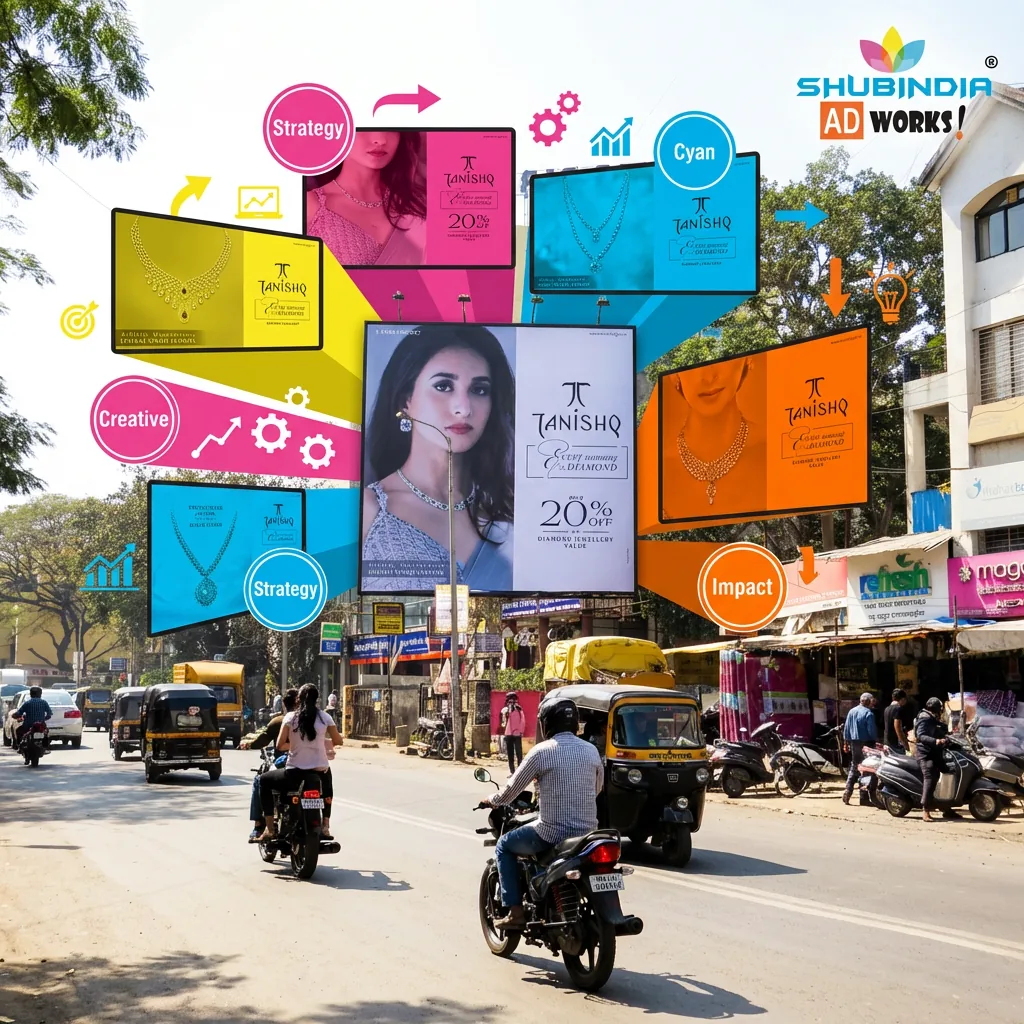
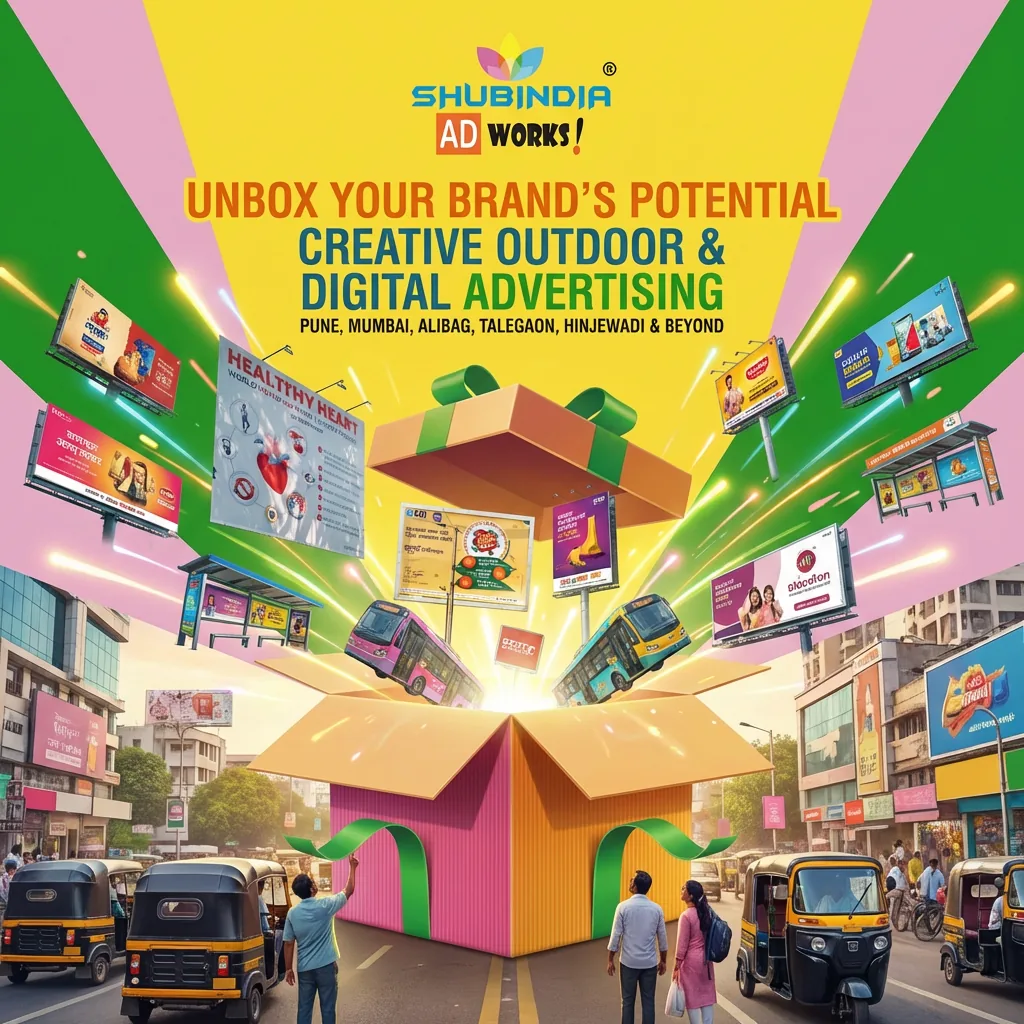
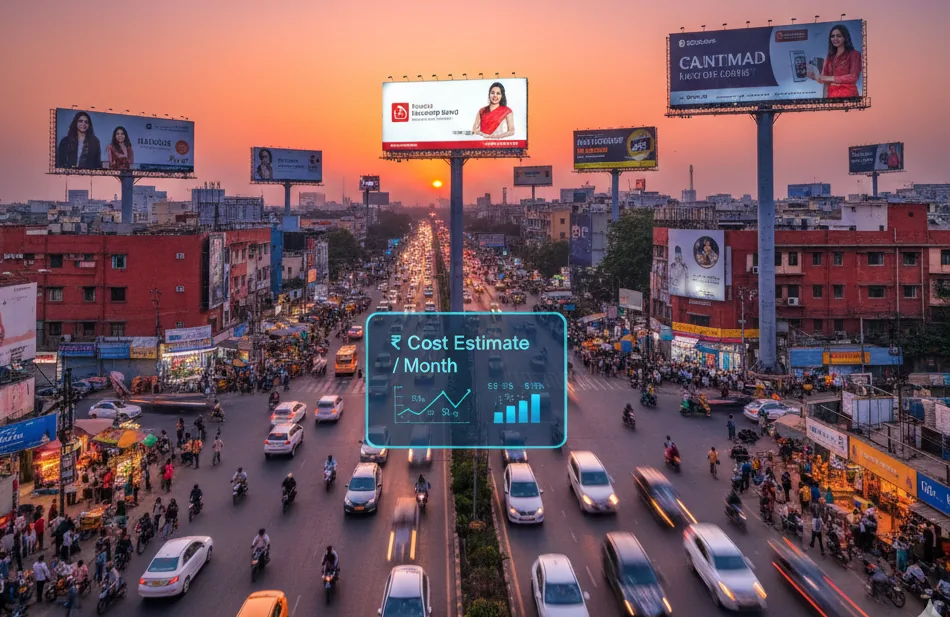
Discover the complete guide to hoardings advertising in India for 2026, including updated billboard rates, strategies, market trends, and tips for brand success in outdoor advertising.
What is Hoardings Advertising in India?
Hoardings advertising in India refers to the use of large outdoor billboards placed at strategic, high-traffic locations across urban and semi-urban landscapes. These static or digital displays target motorists, pedestrians, and public commuters, making them a highly visible and impactful medium for brand communication.
India boasts one of the world’s fastest growing outdoor advertising (OOH) markets. According to Exchange4media and Madison OOH Report, the Indian OOH market was valued at approximately ₹4,200 crore in FY2025, with billboards (or hoardings) accounting for nearly 65-70% of this spend. From metropolitan cities like Mumbai, Delhi, and Bengaluru to emerging Tier 2 centers like Pune, Surat, and Indore, hoarding advertising forms the backbone of OOH strategies.
Hoardings come in various formats and sizes: classic painted displays, unipoles, backlit/LED screens, and digital billboards (DOOH). Their ability to deliver repetitive, mass exposure makes them ideal for brand launches, festive campaigns, and high-stakes product promotions—be it for consumer goods, real estate, education, or electoral campaigns.
Key Takeaway: Hoardings remain the centerpiece of Indian outdoor advertising, offering brands unmatched reach and continuity in key markets.
Latest India Hoardings Advertising Rates & Cost Factors in 2026
Understanding India’s advertising rates for hoardings is pivotal for campaign planning. Billboard rates vary widely based on city, location, traffic volume, hoarding size, and format (static vs. digital).
As of 2026, typical hoarding advertising costs in India are as follows:
- Prime Mumbai, Delhi, Bengaluru: ₹2,00,000 - ₹8,00,000/month
- Tier 2 cities like Pune, Ahmedabad, Lucknow: ₹55,000 - ₹2,50,000/month
- Tier 3 towns & highways: ₹15,000 - ₹60,000/month
- Digital hoardings: Premium of 30-60% above static pricing
Several factors influence these rates:
- Location & Visibility: High-traffic junctions, highways, airports, and metro corridors command higher rates.
- Size & Format: Larger or illuminated displays cost more.
- Duration: Longer bookings may offer better effective monthly rates.
- Festive Seasons: Rates spike during Diwali, IPL, elections, and local events.
| City | Typical Rate (Static) | Digital Hoarding |
|---|---|---|
| Mumbai | ₹2-8 Lakhs/month | ₹2.5-10 Lakhs/month |
| Delhi NCR | ₹1.5-7 Lakhs/month | ₹2-9 Lakhs/month |
| Pune | ₹50K-2.5 Lakhs/month | ₹60K-3 Lakhs/month |
| Lucknow | ₹30K-1.2 Lakhs/month | ₹36K-1.6 Lakhs/month |
Expert Tip: For transparent, city-wise rate cards and premium locations, consult a specialist like Shubindia Ad Works with 12,000+ media options and deep local expertise.
How to Choose the Best Locations for Billboard Campaigns
Selecting the right hoarding locations determines campaign success. In India, the sheer diversity of urban layouts, commuter demographics, and cultural events means that a one-size-fits-all approach doesn’t work.
Here’s how leading brands and agencies select locations in 2026:
- Traffic Analysis: Measuring average daily traffic (ADT) using mobility or GPS analytics helps pick hotspots—major intersections, expressways, arterial roads.
- Target Audience Mapping: Location selection depends on whether the brand targets office-goers (CBDs), students (university clusters), or families (residential enclaves).
- Festival & Event Timing: Diwali, Ganesh Chaturthi (Pune, Mumbai), Durga Puja (Kolkata), and local fairs see spike in visibility and engagement.
- Complementing Transit Nodes: Hoardings near Metro stations, airports, and bus shelters multiply brand touchpoints.
Case Study: A Mumbai-based FMCG deployed 10 hoardings along the Western Express Highway during IPL, reaching over 1.2 million commuters daily, resulting in a 23% sales uptick in 2 months.
Key Takeaway: Combine traffic data with local cultural pulse to select high-impact hoarding sites. Partnering with agencies that work across 200+ cities, like Shubindia, ensures optimal location strategy.
Comparing Hoardings with Other Outdoor Advertising Formats
While hoardings dominate India’s OOH market, other formats are crucial for 360° campaign reach. Let’s compare key options:
| Format | Approx. Monthly Cost | Best For | Visibility |
|---|---|---|---|
| Hoardings | ₹15K - ₹8L | Brand launches, mass reach | High, 24x7 |
| Bus Shelters | ₹8K - ₹30K | Local targeting, retail | Medium, day commuters |
| Metro Stations | ₹50K - ₹5L | Urban, working population | Very High |
| Airport | ₹2L - ₹20L | Premium, affluent audience | Premium, captive audience |
| Cinema Screens | ₹8K - ₹30K/screen/week | Youth, family segments | High, pre-movie slots |
As seen, hoardings provide unique advantages—constant visibility, scale, and geographic flexibility. Integrating them with transit and retail-based media delivers a composite, multi-touch campaign.
Expert Tip: Consult with Shubindia’s Outdoor Advertising experts to create city-specific OOH media mixes that fit your brand’s scale and budget.
Trends Shaping Hoardings Advertising in India for 2026
India’s hoarding landscape is evolving rapidly, driven by technology, urbanization, and changing consumer behavior. Key 2026 trends include:
- Digital OOH (DOOH) Surge: The DOOH market is estimated at ₹1,000 crore (2025) and is growing at a strong 25-30%. Programmable, dynamic billboard ads are becoming the norm in metros and tech-savvy Tier 2 cities.
- Data-Driven Location Selection: Brands now use geo-analytics and behavioral insights to select high-yielding locations, vastly improving ROI versus traditional guesswork.
- Creative Localization: Regional festivals, language, and themes are tailored on hoardings—from Ganeshotsav in Pune to Baisakhi in Punjab.
- Sustainability Focus: Use of renewable energy (solar-lit hoardings), eco-friendly materials, and responsible land use is increasing.
- Integration with Online Campaigns: QR codes and AR features bridge physical billboards and digital engagement, tracking footfall-to-website conversions.
Key Takeaway: Stay ahead by embracing DOOH, leveraging local culture in creatives, and integrating hoardings with digital analytics.
How to Plan and Launch a Successful Hoarding Campaign in India
Launching a hoarding campaign isn’t just about renting a billboard—it entails strategic planning, creative execution, and robust measurement. Here’s a step-by-step process for 2026:
- Define Objectives: Brand awareness, festive sales, store openings, or event promotions.
- Media Planning: Select optimal locations/cities, duration, and formats based on traffic, audience, and market data (use tools like GeoIQ, AdEx).
- Creative Adaption: Design high-contrast, concise, and regionally resonant visuals. Adapt in vernacular for states like Maharashtra, Tamil Nadu, and West Bengal.
- Permits & Compliance: Work with agencies experienced in securing municipal permissions and adhering to local OOH regulations—non-compliance risks blackouts and fines.
- Monitoring & Optimization: Use photographic proof, geo-location tags, and, where available, DOOH analytics for campaign tracking.
Expert Tip: Shubindia Ad Works has executed 1,200+ campaigns across 200+ Indian cities, streamlining everything from site survey to post-campaign impact reports. Engage expert partners for end-to-end campaign success.
Why Leading Brands Trust Shubindia for Hoardings Advertising
With over a decade of leadership in outdoor advertising, Shubindia Ad Works is a trusted partner for India’s top brands, SMEs, and political campaigns.
- 12,000+ media options in hoardings, bus shelters, metro stations, airports, and more
- 300+ diverse clients, including MNCs, government, startups
- Presence in 200+ cities, pan-India, ensuring local market expertise
- Turnkey campaign management—from concept to execution, monitoring, and reporting
- Transparent, customized rate cards and proven vendor network for last-mile delivery
Shubindia’s team stays ahead with festival-led scheduling, city-by-city rate benchmarking, and digital innovation (including DOOH, AR, and QR-based engagement). Whether you need visibility in Pune’s IT corridor or Mumbai’s arterial roads, Shubindia offers the scale, data, and creative agility to maximize ROI.
Key Takeaway: For results-driven hoarding campaigns in India, leverage Shubindia’s nationwide scale and end-to-end solutions.
Contact us: +91-9011126970, sales@shubindia.com or visit Shubindia Outdoor Advertising
Frequently Asked Questions
What is the cost of hoardings advertising in major Indian cities in 2026?
Hoarding advertising rates in 2026 vary by city, location, and size. In metro cities like Mumbai and Delhi, rates range between ₹2 lakh to ₹8 lakh per month for premium sites, while Tier 2 cities such as Pune or Ahmedabad are generally between ₹55,000 and ₹2.5 lakh per month. Digital hoardings command a 30-60% premium. Contact Shubindia Ad Works for detailed, city-specific rate cards and options.
How do I get permissions for hoarding advertising in India?
Securing legal permissions for hoarding advertising involves applying to municipal corporations or local urban authorities and ensuring adherence to city-specific OOH regulations. The process can be complex due to documentation, fees, and environmental clearances. Shubindia Ad Works handles all compliance, permissions, and documentation, making the process seamless for brands.
What formats of hoardings are available for advertising?
In India, the main hoarding formats include static billboards, backlit/LED displays, and digital OOH (DOOH) billboards. Sizes typically range from 20x20 ft up to 80x20 ft, with location-based customizations available. Shubindia Ad Works offers over 12,000+ media options, ensuring the right format for every brand and campaign objective.
Why should I choose hoardings over other outdoor media?
Hoardings offer unmatched visibility, mass reach, and constant 24/7 exposure—key for brand launches and reinforcing recall. Compared to other formats like bus shelters or transit ads, hoardings accommodate larger creatives and have a stronger impact over highways, arterial roads, and commercial zones. For integrated outdoor media plans, Shubindia combines hoardings with metro and airport advertising for maximum effectiveness.
How can I measure the effectiveness of my hoarding campaign?
Hoarding campaign effectiveness is measured through parameters like estimated reach (based on traffic data), visibility duration, and location quality. Brands also use photographic monitoring, geo-tagged proof, and (for DOOH) real-time impressions. Shubindia Ad Works provides detailed post-campaign reports, including impact analysis and optimization suggestions.

Written by
Shubham Jain
Founder, Shubindia Ad Works
Outdoor advertising strategist with 13+ years planning hoardings, metro, airport, and DOOH campaigns across 114+ Indian cities. Founded Shubindia Ad Works in 2013; today the agency manages 12,000+ media options for 300+ brands. Passionate about measurable brand outcomes and honest media rate-cards.
Related Articles
More from Outdoor Advertising
How Much Does Outdoor Advertising Cost in India in 2026?
Outdoor advertising in India in 2026 costs between ₹18,000 and ₹9,50,000 per month per site depending on city tier, format and location. A standard 20×10…
Outdoor AdvertisingDigital OOH (DOOH) Advertising Growth in India: Insights for 2026
Explore the dynamic world of Digital OOH in India for 2026, its market growth, strategic locations, industry impact, and keys to successful campaigns.
Newspaper AdvertisingProperty Classified Ads 2026 — Buy Sell Rent in Pune & Mumbai Newspapers
Print property classifieds convert 3-4x better than portals for owner-direct listings and rental markets in Pune + Mumbai. Full 2026 rates, best days and templates.