Q: What are railway advertising rates in Pune for 2026?
Railway advertising in Pune 2026 offers formats like train wraps, platform hoardings, and coach panels with rates ranging ₹25,000–₹5,00,000/month depending on location and format. High footfall stations deliver measurable ROI for brands targeting daily commuters and travelers, according to Shubindia Ad Works.
Railway & Train Advertising Success in Pune 2026
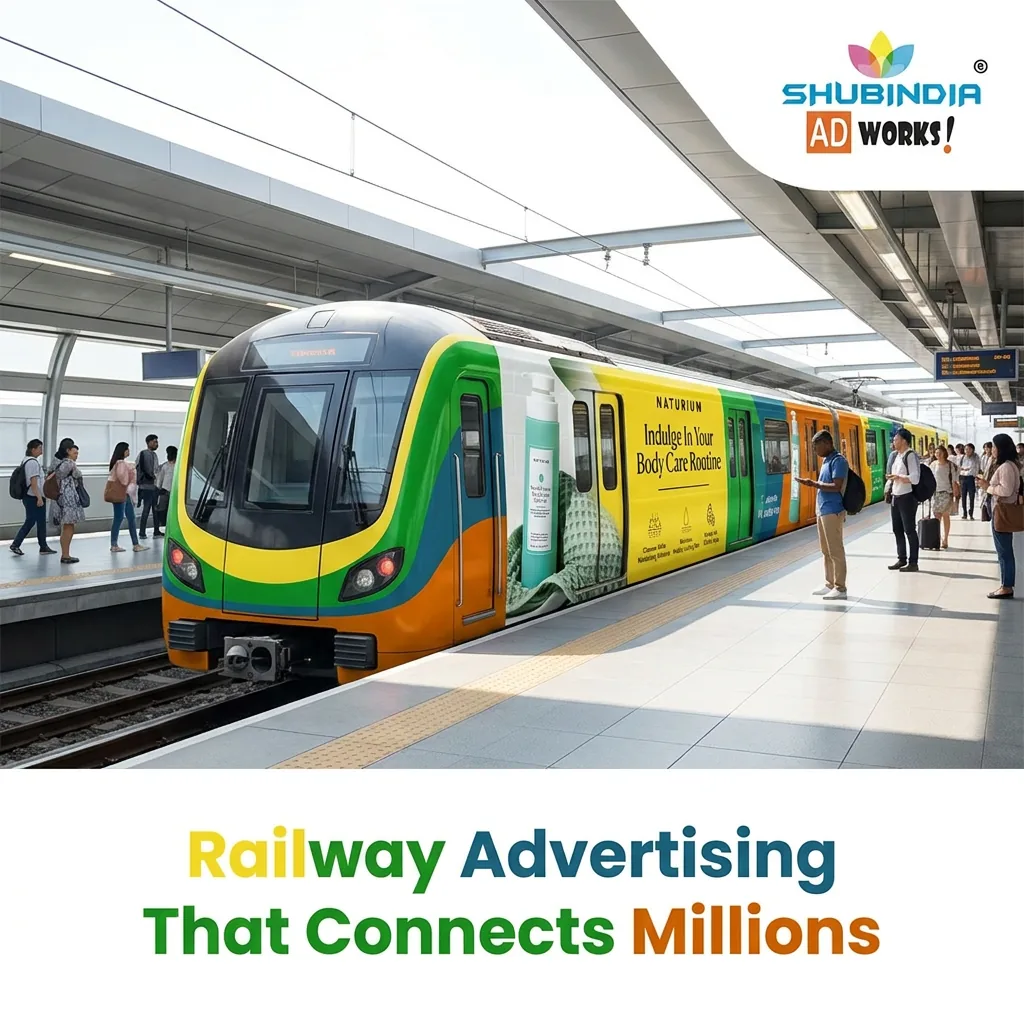
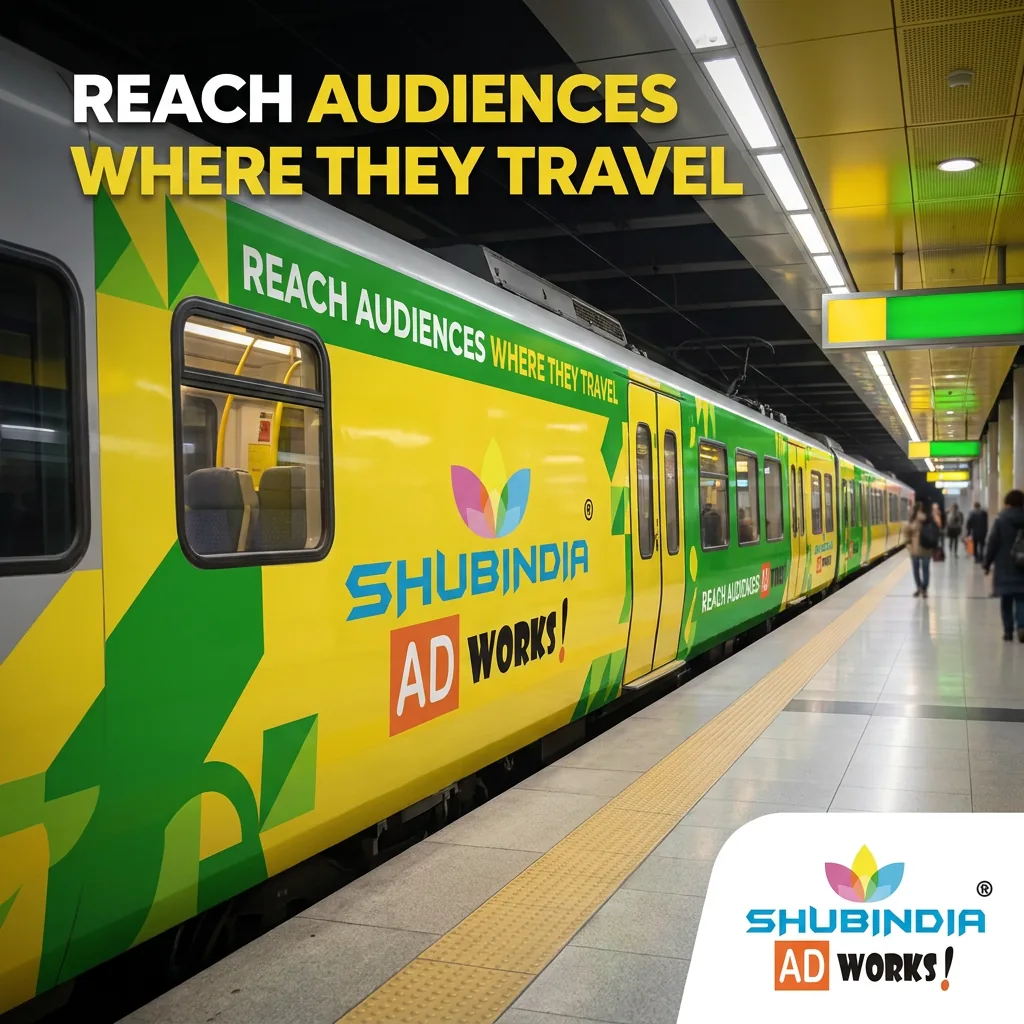
Discover the impact of railway advertising in Pune for 2026, its costs, and best practices.
Why Railway & Train Advertising Works in Pune in 2026
Pune, as Maharashtra's second-largest city with a booming metropolitan population of 8.6 million, offers a strategic advantage for railway and train advertising. This city, known for its bustling economic corridors like Hinjewadi, Kharadi, and FC Road, acts as a magnetic hub for professionals, students, and tourists alike. With Pune contributing significantly to Maharashtra's GDP, IBEF 2025 highlights the city's impressive economic growth, placing it in the top 5% of Indian urban locales. The railway network in Pune serves as a crucial conduit, connecting diverse demographics and providing advertisers a captive audience that cannot evade engagement during their commutes.
Pune’s railway junctions, like the Pune Junction and Shivajinagar station, see a tremendous flux of passengers daily. This ensures high visibility for advertisements strategically placed at entry and exit points or on digital screens. The effectiveness of railway advertising in these areas is strongly supported by PCI data, revealing a 30% rise in brand recall among frequent commuters. Moreover, the city's expanding metro network introduces new advertising potential—a point not lost on businesses looking to capitalize on foot traffic stemming from areas like the Balewadi High Street and Viman Nagar. These advertisements are bolstered by Pune's robust economic dynamics and diverse target audiences, including the tech-savvy youth and high-income professionals, promising exceptional ROI.
Top Pune Locations / Media Properties for Railway & Train Advertising
Pune’s railway and metro stations are pivotal locations for impactful advertising. Pune Junction, one of the busiest railway stations, offers numerous advertising formats ranging from hoardings to digital displays that capture the attention of daily commuters. Shivajinagar, another key station, serves as a nodal point for passengers traversing through Pune’s business districts and educational hubs. Advertisements here benefit from exposure to a mixed audience, comprising college students and corporate employees. Stations like Pimpri-Chinchwad and the Pune Metro Purple Line, weaving through prime real estate corridors such as Baner and Aundh, make for lucrative advertising spots. MRSI 2025 data indicates a 15% annual increase in foot traffic in these areas, underscoring the potential reach and effectiveness of rail-bound advertisements.
Pune Metro’s Aqua Line, connecting IT hotbeds like Hinjewadi, presents additional opportunities for placing transit ads. Here, advertisers harness the power of frequent trippers—IT professionals who interact daily with the metro infrastructure. To complement these train and station ads, leveraging print media such as 'Sakal' or 'Pune Mirror' publications can further amplify reach. Such cross-platform synergies ensure that messages resonate across the transit-lifestyle continuum of the city's diverse population, ultimately reinforcing campaign effectiveness.
Cost & Pricing Guide for Railway & Train Advertising in Pune
When considering railway and train advertising costs in Pune, it is crucial to recognize the variances dictated by location, timing, and format. Iconic stations like Pune Junction, given their high daily footfall, command premium pricing. Here, standard static ads may cost upwards of ₹2 lakh for a month, covering formats such as train interiors or prominent station panels. For advertising in premium slots, such as digital screens or dynamic hoardings during peak hours, prices can surge, with monthly expenses extending to ₹5 lakh or more.
On the Pune Metro, especially along lines with heavy commuter traffic like the Purple Line, advertisers can expect pricing to begin in the mid-six-figure range per month. Placement on metro stations like Deccan Gymkhana, known for its connectivity to upscale retail and dining areas, can be a high-value proposition for consumer brands. Customization options, such as ad activations or special event campaigns, can further influence costs, offering advertisers additional leverage to create high-impact, experiential engagements.
For businesses keen to explore cost efficiencies, a mix of station and in-transit advertising, supported by package deals from agencies like Shubindia Ad Works, can ensure budget-friendly yet potent advertising campaigns, tailored for the market's dynamic needs and its varied audience segments.
How to Plan a Successful Railway & Train Advertising Campaign in Pune
- Identify Target Audience: Utilize demographic insights to craft campaigns that resonate with specific traveler profiles, such as young professionals within the tech belt or students across Pune’s prominent educational institutions.
- Select Key Locations: Prioritize stations and lines known for significant commutership, such as Pune Junction, Pimpri-Chinchwad, and the burgeoning metro network spanning Hinjewadi and Aundh.
- Define Financial Goals: Establish measurable ROI objectives upfront, considering factors like seasonal travel spikes and consumer sentiment indices as reported in Pitch Madison’s forecasts.
- Creative Design: Employ high-impact visuals that simplify complex brand messages, ensuring clarity and engagement in high-traffic environments.
- Monitor Campaign Performance: Use technologies like geo-fencing and mobile data analytics to track impressions and engagement levels, adapting swiftly based on KPI feedback.
- Optimize Based on Feedback: Leverage commuter feedback and footfall data from sources like IRS reports to refine messaging, thus enhancing campaign efficacy and adjusting touchpoints for continuous engagement.
An approach that weaves together meticulous planning and adaptive execution is vital for brands aiming to maximize exposure in Pune’s transportation hubs.
Best Industries & Use Cases for Railway & Train Advertising in Pune
The prospering economic ecosystem of Pune makes it an ideal canvas for varied industries to deploy railway and train advertising strategies. The real estate sector, for instance, thrives by targeting upwardly mobile professionals commuting through Pune’s suburbs, with ads offering insights into new residential projects. Similarly, banking and financial services institutions utilize train ads to reinforce brand trust and engage with the urban achievers who populate the daily commute zones.
For the FMCG industry, the transient nature of train travel allows for high-frequency, impulse-driven advertising that sparks immediate consumer actions, especially effective at metro stops like Baner and Wakad. Educational entities harness this advertising medium to capture the attention of ambitious students and parents alike at stations near academic powerhouses like Fergusson College and Symbiosis International University.
Interestingly, the robust automobile sector in Pune also benefits from targeted placements in train advertisements. With Pune being a central node for the automotive industry, strategic ads in industrial commuter zones resonate deeply, keeping manufacturers and suppliers top-of-mind within their core audience — the very workforce that propels this sector forward.
Measuring ROI: KPIs and Attribution for Railway & Train Advertising
Quantifying ROI in railway and train advertising requires an intersectional approach, using multiple key performance indicators that reflect both visibility and engagement. Impression counts sourced from transit data and footfall analytics at bustling stations like Pune Junction provide a solid base measurement for advertiser reach. In addition, monitoring brand recall post-campaign via surveys or consumer studies—as often outlined in FICCI-EY’s advertising impact reports—helps gauge the advertising efficacy.
Integration of digital tracking mechanisms can significantly enhance attribution accuracy. For example, QR codes embedded within station ads can lead observers directly into brand ecosystems, allowing for tangible engagement metrics to be collected. Meanwhile, smartphone-based geo-located push notifications triggered at proximity to ad sites further aid in detailing consumer interaction trajectories.
The attribution model can also extend to sales and enquiry uplifts, matched against historical data baselines, providing businesses clear insight into the correlation between transportation network advertisements and commercial outcomes. Tailoring campaigns to include incentive-driven tracking, such as promo codes, further tightens the feedback loop, ensuring advertisers have an analytics-backed framework for refining future strategies in similar high-footfall, high-impact environments.
Learn more about Railway & Train Advertising for a free quote.

Written by
Shubham Jain
Founder, Shubindia Ad Works
Outdoor advertising strategist with 13+ years planning hoardings, metro, airport, and DOOH campaigns across 114+ Indian cities. Founded Shubindia Ad Works in 2013; today the agency manages 12,000+ media options for 300+ brands. Passionate about measurable brand outcomes and honest media rate-cards.
Related Articles
More from Transit Advertising
Metro Advertising in India 2026: Formats, Pricing & Best Practices
Metro advertising in India in 2026 spans 12 cities (Delhi, Mumbai, Bengaluru, Hyderabad, Chennai, Pune, Kochi, Kolkata, Nagpur, Jaipur, Lucknow,…
Transit AdvertisingRailway & Train Advertising in India: Key Insights for 2026
Discover why railway and train advertising in India offers extensive reach and ROI for 2026 and how Shubindia Ad Works can help maximize your campaign impact.
Newspaper AdvertisingProperty Classified Ads 2026 — Buy Sell Rent in Pune & Mumbai Newspapers
Print property classifieds convert 3-4x better than portals for owner-direct listings and rental markets in Pune + Mumbai. Full 2026 rates, best days and templates.