Q: What are metro advertising rates in India for 2026?
Metro advertising rates in India for 2026 typically range from ₹30,000 to ₹5,00,000 per month depending on station footfall, format (pillar wraps, platform posters, train branding), and city (Delhi, Mumbai, Bangalore, Pune). High-traffic stations command premium pricing, while emerging metro networks offer cost-effective entry points, according to Shubindia Ad Works.
Metro Advertising in India: Complete Guide & 2026 Rates
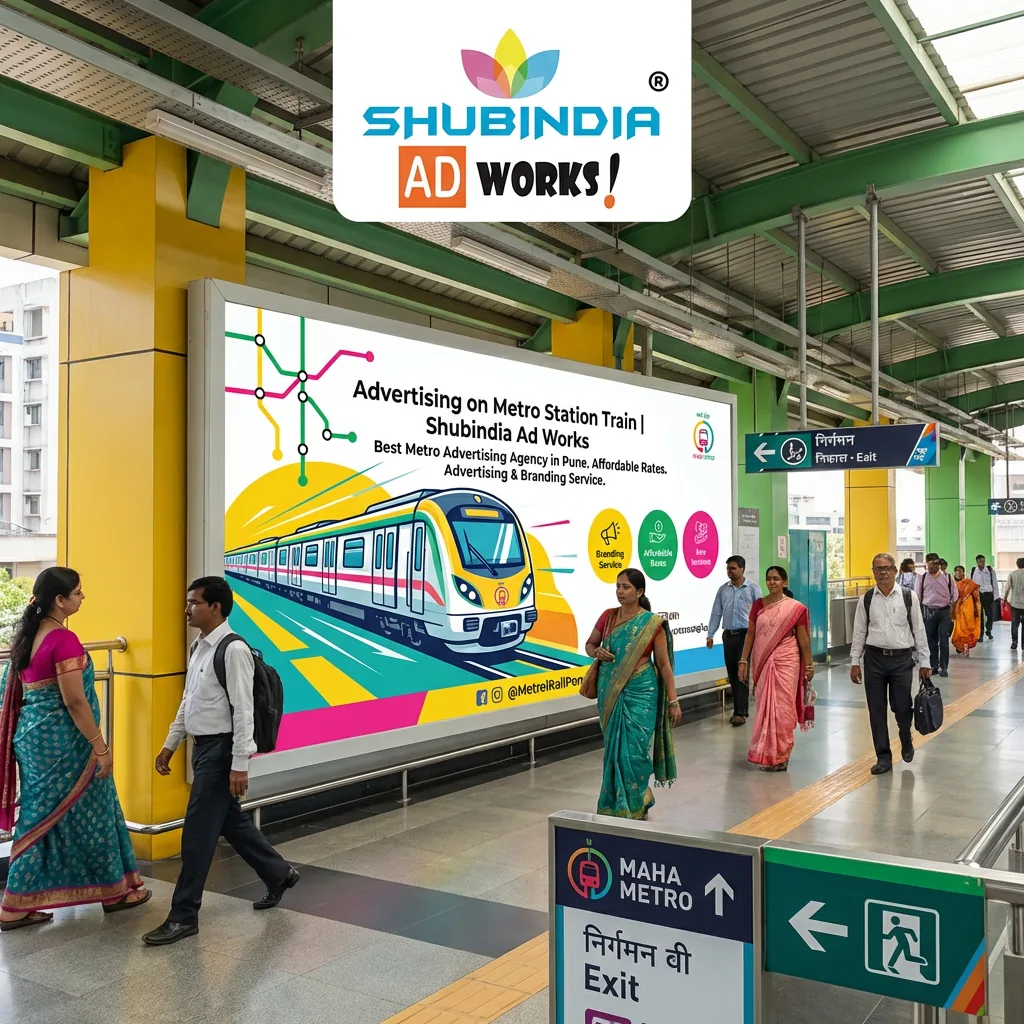
Metro advertising in India is transforming urban marketing in 2026. Explore real rates, major city options, and how Shubindia Ad Works powers transit media success.
What is Metro Advertising in India? A 2026 Overview
Metro advertising in India leverages the rapidly expanding network of urban transit systems to deliver brand messages to millions each day. With metro systems running in over 15 Indian cities (including Delhi, Mumbai, Bangalore, Hyderabad, Chennai, Kolkata and Pune), metro ads connect brands directly with a high-value, urban and working professional demographic.
According to industry data, metro systems in India now handle over 8 million daily commuters (DMRC, 2024), and together generated an estimated ₹550 crore in OOH media revenue in 2025. Metro advertising uses formats such as station hoardings, train wrap ads, platform screens, digital panels, and even branded tokens or floor graphics, delivering unparalleled dwell time and recall.
Metro advertising is a crucial part of modern Outdoor Advertising, offering: - High-frequency reach during peak work hours - Uncluttered environments compared to traditional roadside hoardings - Measurable ROI, especially with Digital OOH (DOOH) within metro stations
Expert Tip: Metro advertising allows brands to target the urban mobile population precisely—ideal for product launches during festive seasons like Diwali, Ganeshotsav, or new year, maximizing recall.
India Advertising Rates: Metro Advertising Cost Breakdown (2026)
The cost of metro advertising varies by city, location within the station, ad format, and campaign duration. 2026 metro advertising rates in India range from ₹50,000 to ₹5,00,000 per month, with premium options at metro airports or interchange stations reaching even higher.
For a comprehensive analysis, here’s a breakdown:
- Station Hoardings: ₹1,00,000 - ₹4,00,000/month (major metros)
- Platform Digital Panels: ₹80,000 - ₹2,50,000/month
- Train Wraps: ₹2,50,000 - ₹12,00,000/month (full train, all coaches)
- Entry/Exit Gates: ₹50,000 - ₹1,80,000/month
Actual rates may vary by metro brand (*e.g. Delhi Metro, Mumbai Metro, Hyderabad Metro*). Bulk bookings or long-term contracts often fetch volume discounts.
| Ad Format | Delhi Metro (per month) | Mumbai Metro (per month) | Bangalore Metro (per month) |
|---|---|---|---|
| Hoarding (40x20 ft) | ₹3,20,000 | ₹2,80,000 | ₹2,00,000 |
| Digital Panel | ₹2,10,000 | ₹1,60,000 | ₹1,20,000 |
| Train Wrap | ₹10,00,000 | ₹9,00,000 | ₹5,50,000 |
Key Takeaway: Metro advertising costs can be optimized by targeting mid-tier stations or running integrated Metro Advertising campaigns across multiple lines.
Why Choose Metro Advertising Over Other OOH Media?
While India’s OOH advertising market was valued at approximately ₹4,200 crore in 2025, metro dominates urban-centric campaigns due to unparalleled frequency, captive audiences, and a modern premium brand ambiance. Here’s how metro stacks up against other key OOH platforms:
| Media Type | Monthly Cost Range (Rs) | Audience Profile | Visibility Duration | Brand Recall |
|---|---|---|---|---|
| Metro Advertising | 50,000 - 5,00,000 | Urban, Office-goers, Youth | 7-20 mins average dwell | High |
| Hoardings | 15,000 - 8,00,000 | Mixed | 3-5 seconds | Medium |
| Bus Shelters | 8,000 - 30,000 | Mass Urban | 1-5 mins | Medium |
| Airport | 2,00,000 - 20,00,000 | Affluent, Corporate | 30-120 mins | Very High |
Brands like Tata Motors, Samsung, and HDFC Bank have leveraged metro branding for new launches because metro formats ensure repeated exposure during Mumbai’s Ganeshotsav, Delhi’s festive season rush, or Bengaluru’s tech summits.
Expert Tip: For best ROI, integrate metro media with other Outdoor Advertising to scale reach beyond commuters.
Top Metro Advertising Options in Major Indian Cities (Delhi, Mumbai, Bangalore, Hyderabad, Chennai, Pune)
Each city’s metro system offers unique advertising opportunities. Delhi Metro has 250+ stations and over 3 million daily riders, making it a leading India transit media market. Mumbai Metro is ideal for high-impact brand takeovers in business districts like Andheri, Ghatkopar, and BKC. Bangalore Metro has a highly educated tech audience, while Hyderabad and Chennai metros are rapidly growing with expansion into new suburbs.
Key options include:
- Station Banners & Hoardings: Front-facing large formats at entrances/exits and visible from outside.
- Digital Screens & DOOH: Premium dynamic ads at platforms, ticket counters, and escalators.
- Train Wraps & Interiors: Full train/branded compartments and seatbacks—perfect for high-visibility FMCG or tech products.
- Floor Graphics, Gate Ads, and Escalator Panels: Eye-level formats with measurable interaction rates.
Expert Tip: During major festivals and city events, metro ridership surges by up to 35%, increasing ad exposures substantially. Time campaigns accordingly.
Digital OOH (DOOH) in Metro Advertising: India’s New Age Transit Media
Digital OOH (DOOH) is revolutionizing metro advertising across India. As of 2025, India’s DOOH market was valued at ₹1,000 crore, with metro stations being front-runners in adopting digital panels, LED walls, and interactive kiosks.
Benefits of DOOH in Metro: - Real-time campaign updates & quick creative swap - Motion graphics/video content for higher engagement - Flexible dayparting: Run different creatives during morning vs. evening rush - Accurate impression analytics through footfall tracking
For example: Delhi Metro’s Rajiv Chowk and Mumbai Metro’s Andheri stations now feature 3m x 1m digital screens seen by 2-4 lakh people daily. Brands such as Zomato and LG use DOOH for flash sales and time-bound offers.
Key Takeaway: DOOH provides data-backed flexibility to optimize Metro Advertising in real time—ideal for product launches, OTT shows, fintech, and mobile apps.
How to Plan a Successful Metro Advertising Campaign in India (Step-by-Step)
Planning a metro advertising campaign requires granular targeting, creative execution, and expert media negotiation. Here’s a proven stepwise approach:
- Define Objectives: Awareness, product launch, footfall uplift, or hyperlocal branding
- Select Metro Lines & Stations: Target routes with the highest traffic for your ideal demographic—consider city segmentation (e.g., IT corridors in Bangalore, business zones in Mumbai)
- Select Formats & Budget: Choose a mix of hoardings, digital screens, and train wraps. Stay updated on India advertising rates.
- Creative Adaptation: Design for dynamic environments; use bold visuals and concise copy.
- Compliance & Approvals: Submit designs to metro authorities for technical/creative vetting—ensure adherence to city-specific standards
- Execution & Monitoring: Trusted agencies like Shubindia Ad Works monitor installation, maintain creatives, and supply proof-of-play reports.
Why Partner with Shubindia Ad Works for Metro Advertising in India?
Shubindia Ad Works is Pune’s leading transit media specialist with 12,000+ media options, 300+ clients, 1,200+ successful campaigns across 200+ Indian cities. Our local expertise ensures your metro advertising leverages optimal placements, city-specific rates, and creative innovation.
Key Advantages:
- Real-time rate negotiation with metro authorities
- Pan-India execution, single-point billing for multi-city campaigns
- Digital reporting, on-ground monitoring, and creative support
Expert Tip: Client brands like Bajaj, Jio, Paytm, and Ferns N Petals regularly choose Shubindia for end-to-end metro campaigns to maximize festival season impact.
Get Started With Metro Advertising in India – Contact Shubindia Ad Works
Ready to launch your next metro campaign? Whether you want to target Delhi Metro’s daily 30 lakh riders or Pune Metro’s emerging affluents, Shubindia Ad Works is the trusted partner for full-service Metro Advertising in India.
- Access updated India advertising rates and format guidance
- End-to-end creative, compliance, and execution support
- City-specific insights for precise targeting
- Phone: +91-9011126970
- Email: sales@shubindia.com
- Website: Metro Advertising Services
Frequently Asked Questions
What is the minimum metro advertising cost in India for 2026?
The minimum metro advertising cost in India for 2026 starts from ₹50,000 per month for basic entry/exit gate panels or smaller digital screens in cities like Pune or Kochi. In major cities like Delhi or Mumbai, prime locations and large hoardings can cost upwards of ₹1,00,000 per month. Partnering with Shubindia Ad Works ensures transparent rate negotiations and bundled discounts to optimize campaign spend.
How are metro ad rates calculated in India?
Metro ad rates in India are calculated based on several factors: city (Delhi, Mumbai, Bangalore have premium rates), station category (interchange, terminal, or regular), format (hoardings, train wraps, DOOH), size, placement, and duration. Bulk bookings usually attract lower monthly rates. Shubindia Ad Works provides detailed metro advertising cost breakdowns and negotiates with transit authorities for the best deals.
Which metro stations in India are best for high-impact advertising?
High-traffic interchange stations like Delhi’s Rajiv Chowk, Mumbai’s Andheri, Bangalore’s MG Road, Chennai’s Thirumangalam, and Hyderabad’s Ameerpet are best for metro advertising. These hubs offer maximum daily footfall, high dwell times, and premium visibility. Shubindia Ad Works recommends targeting such stations during festive seasons or major city events for ensured high-impact reach.
Is digital advertising available in Indian metro stations?
Yes, most Indian metros—including Delhi, Mumbai, and Bangalore—now feature extensive Digital OOH (DOOH) options like LED screens, video walls, digital pillars, and interactive kiosks. These allow real-time ad swaps, audience analytics, and flexible creative execution. Shubindia Ad Works specializes in city-wide DOOH metro campaigns with full reporting and creative support.
How do I book a metro advertising campaign in India?
To book a metro advertising campaign in India, contact a specialist agency like Shubindia Ad Works. Share your campaign objectives, target cities, preferred formats, and estimated budget. The agency will provide media plans, updated India advertising rates, obtain metro authority permissions, handle installation, and monitor the campaign throughout the contracted duration for maximum ROI.

Written by
Shubham Jain
Founder, Shubindia Ad Works
Outdoor advertising strategist with 13+ years planning hoardings, metro, airport, and DOOH campaigns across 114+ Indian cities. Founded Shubindia Ad Works in 2013; today the agency manages 12,000+ media options for 300+ brands. Passionate about measurable brand outcomes and honest media rate-cards.
Related Articles
More from Transit Advertising
Metro Advertising in India 2026: Formats, Pricing & Best Practices
Metro advertising in India in 2026 spans 12 cities (Delhi, Mumbai, Bengaluru, Hyderabad, Chennai, Pune, Kochi, Kolkata, Nagpur, Jaipur, Lucknow,…
Transit AdvertisingRailway & Train Advertising in India: Key Insights for 2026
Discover why railway and train advertising in India offers extensive reach and ROI for 2026 and how Shubindia Ad Works can help maximize your campaign impact.
Newspaper AdvertisingProperty Classified Ads 2026 — Buy Sell Rent in Pune & Mumbai Newspapers
Print property classifieds convert 3-4x better than portals for owner-direct listings and rental markets in Pune + Mumbai. Full 2026 rates, best days and templates.