Q: What are metro advertising rates and opportunities in India for 2026?
Metro advertising in India in 2026 spans major cities like Delhi, Mumbai, Bangalore, and Pune, with costs ranging from ₹50,000 to ₹5,00,000 per month depending on station footfall, format (wraps, panels, pillars), and campaign duration. High-visibility locations and emerging metro networks offer brands diverse engagement opportunities, according to Shubindia Ad Works.
Metro Advertising in India: Opportunities & Trends in 2026
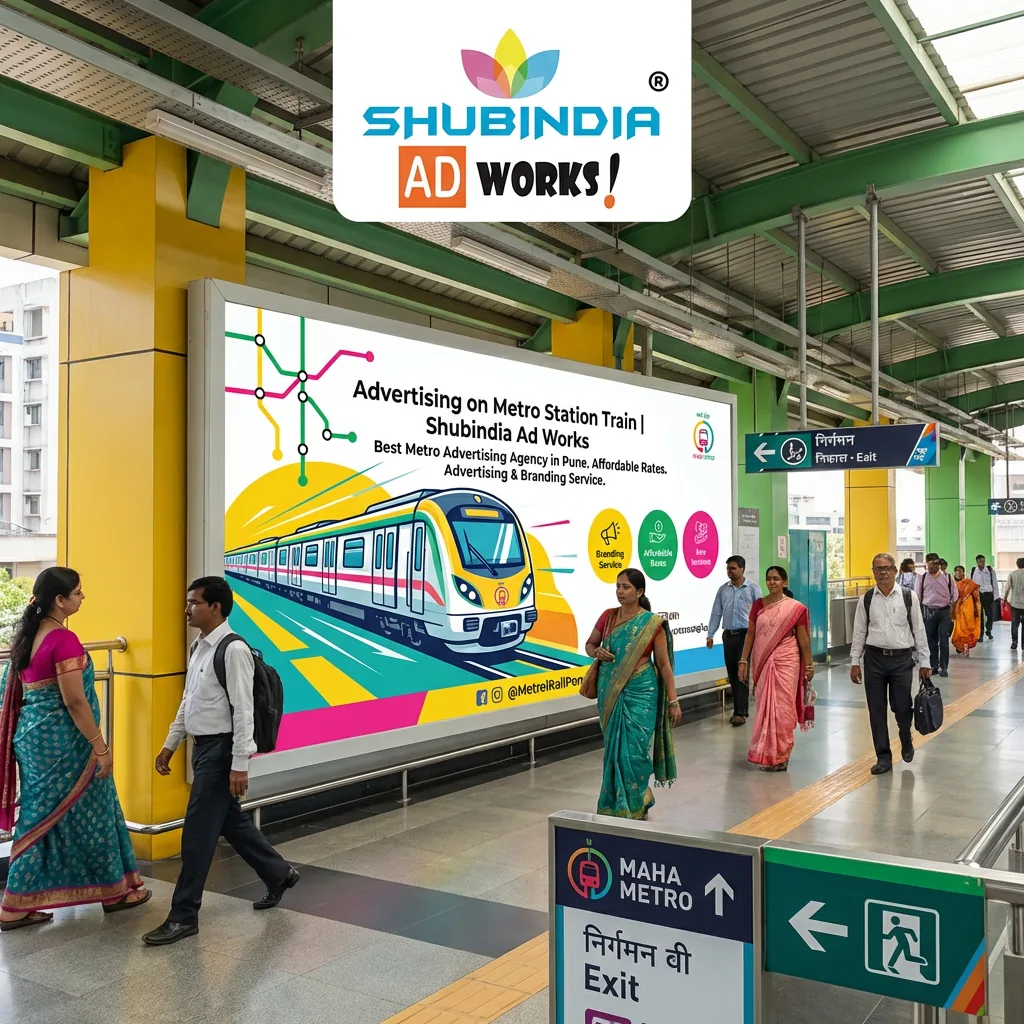
Discover the growing impact of metro advertising in India in 2026. Learn about top locations, costs, and strategies for effective campaigns.
Metro advertising in India is steadily rising to prominence as urban expansions meet innovative advertising technologies. The environment is ripe for escalation, with India's advertising market expected to surpass ₹1,55,000 crore by 2026, according to the FICCI-EY M&E Report 2025. Outdoor advertising, a significant component of this industry, commands ₹4,800 crore, growing annually by 16%. Metro stations serve as critical hubs for these advertisements, leveraging high commuter traffic to provide broad brand visibility.
Why Metro Advertising Works in India in 2026
Metro advertising's efficacy stems from urban infrastructure advancements facilitating high reach to diverse demographics. As verified by the MRSI 2025, primary metros such as Delhi, Mumbai, and Bengaluru yield notable daily commuter figures, making these stations advantageous focal points for advertising. Additionally, the digital OOH segment's growth at 28% per year presents advertisers with flexible, innovative formats that maximize consumer engagement. These metrics highlight metro advertising's prominent role in brand empowerment by 2026.
Top India Locations / Media Properties for Metro Advertising
Some strategic locations for impactful metro advertising campaigns include:
- Rajiv Chowk, Delhi: Highly frequented, making it ideal for capturing metropolitan demographics.
- Chhatrapati Shivaji Terminus, Mumbai: Offers substantial exposure due to immense passenger volumes.
- MG Road, Bengaluru: Known for diverse commuting public encompassing multiple cultural demographics.
- Civil Lines, Jaipur: Features significant exposure to both locals and tourists.
- Kolkata's Esplanade: Provides advertisers a gateway to the city's varied crowd.
These urban centers serve as dynamic grounds for advertisers aiming for maximum exposure and influence, tapping into the metro market's potential in 2026.
Cost & Pricing Guide for Metro Advertising in India
The pricing of metro advertising can significantly vary based on factors such as location, format, and advertisement duration. Prime venues like Rajiv Chowk and Chhatrapati Shivaji Terminus are likely to command premium pricing due to their extensive foot traffic and strategic positioning. Contact Shubindia for a current quote to navigate this varied cost structure effectively, as understanding and estimating ROI is critical for leveraging campaign potential to the fullest.
How to Plan a Successful Metro Advertising Campaign in India
Planning a successful metro advertising campaign in India requires a structured plan involving:
- Define Objectives: Set clear, measurable campaign goals.
- Identify Target Demographic: Conduct market research targeting specific commuter profiles suitable for chosen metro destinations.
- Select Key Locations: Optimize location choices based on desired audience demographic.
- Develop Creative Content: Design compelling visual content to appeal to the commuting public.
- Optimize Budget: Strategically allocate budget across chosen locales for maximum coverage and effectiveness.
- Monitor and Adjust: Employ real-time data monitoring to adjust strategies for enhanced campaign performance.
This comprehensive strategy ensures advertisers engage with their audience effectively, scaling campaigns to achieve high ROI in India's burgeoning metro markets.
Best Industries & Use Cases for Metro Advertising in India
Several industries stand to benefit significantly from the metro advertising realm:
- Real Estate: Using metro platforms to highlight new projects to city professionals.
- BFSI: Capitalizing on high-traffic areas for promoting banking and insurance services.
- FMCG: Engaging commuters with quick-recall branding methods.
- Automotive: Transforming commuters into potential buyers through strategic messaging.
- Educational Institutions: Promoting educational offers during peak carousel times.
- Technology: Engaging tech-savvy metro users with product launches and brand experiences.
Industries across these sectors can harness metro advertising to foster widespread recognition, leveraging India's expansive urban commuter networks to reach target customers efficiently by 2026.
Measuring ROI: KPIs and Attribution for Metro Advertising
Effective ROI measurement is pivotal for metro campaign success:
- Impressions: Determine potential audience exposure at metro stations.
- Footfall Lift: Measure increases in physical presence and potential sales linked to the ad campaign.
- CPM Analysis: Evaluate campaign cost efficiency.
- Brand Recall Percentage: Utilize consumer surveys to adjust future campaigns based on awareness feedback.
Implementing accurate KPI tracking and attribution guides advertisers in optimizing strategy, strengthening campaign returns comprehensively.
Common Mistakes Advertisers Make in India Metro Advertising Campaigns
Avoid these pitfalls to enhance metro campaign efficacy:
- Ignoring Demographic Insights: Targeting needs careful alignment; without this, campaigns risk becoming ineffective.
- Poor Location Selection: Low foot traffic locales reduce campaign impact and ROI.
- Non-efficacious Content: Bland designs diminish commuter engagement.
- Underutilizing Digital Aspects: Failure to integrate digital can limit reach.
- Inefficient Campaign Tracking: Lack of ongoing results adjustment can hinder campaign effectiveness.
Through understanding and mitigating these errors, advertisers can maximize the potential of their campaigns within India's metro advertising sphere.
Why Choose Shubindia Ad Works for Metro Advertising in India
As an industry leader with over 13 years of expertise, Shubindia Ad Works excel in crafting metro advertising strategies tailored to distinct Indian markets. Our expansive network across 200+ cities allows precise campaign delivery, hitting target metrics with custom advertising solutions.
Join us to harness emerging advertising tech and data-driven strategies. Enhance marketing success and discover Metro Advertising and other advertising services through our seasoned proficiency.
Learn more about Metro Advertising for a free quote.

Written by
Shubham Jain
Founder, Shubindia Ad Works
Outdoor advertising strategist with 13+ years planning hoardings, metro, airport, and DOOH campaigns across 114+ Indian cities. Founded Shubindia Ad Works in 2013; today the agency manages 12,000+ media options for 300+ brands. Passionate about measurable brand outcomes and honest media rate-cards.
Related Articles
More from Transit Advertising
Metro Advertising in India 2026: Formats, Pricing & Best Practices
Metro advertising in India in 2026 spans 12 cities (Delhi, Mumbai, Bengaluru, Hyderabad, Chennai, Pune, Kochi, Kolkata, Nagpur, Jaipur, Lucknow,…
Transit AdvertisingRailway & Train Advertising in India: Key Insights for 2026
Discover why railway and train advertising in India offers extensive reach and ROI for 2026 and how Shubindia Ad Works can help maximize your campaign impact.
Newspaper AdvertisingMatrimonial Classified Ads in Marathi & Gujarati Newspapers 2026 — Rates, Templates & Best Days
Matrimonial classifieds still dominate Marathi + Gujarati wedding markets. Get 2026 rates, 6-line templates, caste-community sub-pages and multi-paper Sunday combos.