Q: What are the hoarding permission costs and approval rules in India?
Hoarding permission in India requires municipal approval, with costs ranging ₹15,000–₹2,50,000/month depending on city, location, and hoarding size. Rules vary by state, covering size limits, safety standards, and display duration. Approval timelines typically span 15–45 days, involving site verification and fee payment, according to Shubindia Ad Works.
Hoarding Permission in India: Laws, Rates & Approval Guide
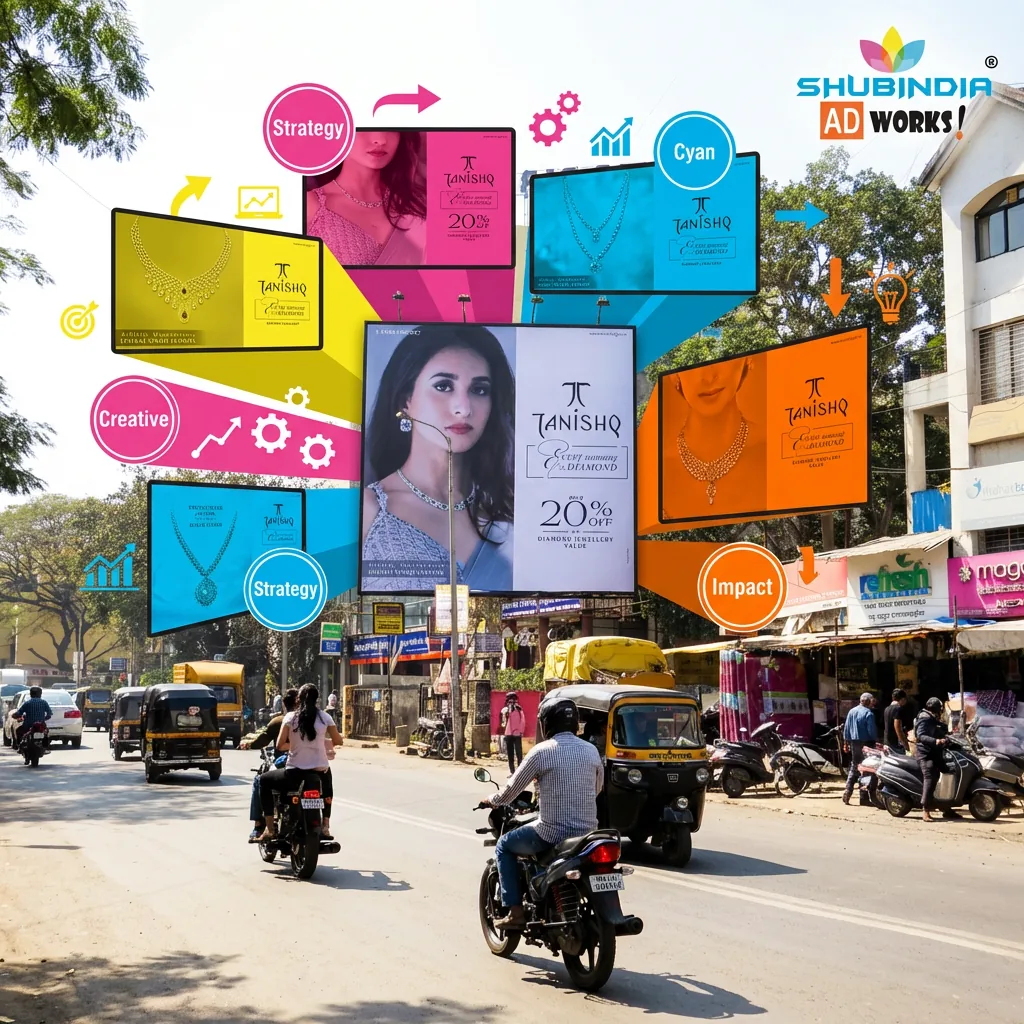


Understanding hoarding permission in India is crucial for legal outdoor advertising. Explore step-by-step rules, city-specific rates, and how Shubindia Ad Works can streamline your approval process.
What is Hoarding Permission in India & Why is It Essential?
Hoarding permission in India is a mandatory legal requirement for displaying any advertising hoarding, billboard, or signage in public spaces. Every city and municipality has its own set of regulations governed by local Urban Development Authorities, Municipal Corporations, and sometimes state-level departments. Failing to obtain proper hoarding permission can result in hefty fines, removal of the advertisement, or even legal action under the Municipal Act.
Securing permission ensures the hoarding's placement is safe, does not endanger traffic, and adheres to urban aesthetic standards. This official approval is also crucial to uphold competitive fairness, control clutter, and prevent unauthorized or hazardous installations.
For instance, in Mumbai, outdoor advertising permissions are overseen by the Brihanmumbai Municipal Corporation (BMC), which has strict codes about distance from intersections, size, and illumination. In Pune or Delhi, similar local rules apply, all ensuring public safety and regulatory compliance.
Expert Tip: Always apply well in advance, as permission processing takes anywhere from 7 to 45 days depending on city and hoarding location. For end-to-end hassle-free service, consider professionals like Shubindia Ad Works who handle documentation, compliance, and negotiation.
Who Grants Hoarding Permissions? Understanding Indian Legal Jurisdictions
In India, hoarding permissions are governed primarily by municipal authorities and occasionally by additional bodies like Urban Planning, Road & Transport Departments, or Heritage Committees (in historic zones). Here’s a look at authority by city:
| City | Permission Authority | Special Considerations |
|---|---|---|
| Mumbai | Brihanmumbai Municipal Corporation (BMC) | Coastal, airport, and traffic rules |
| Delhi | North/South/East MCD, DDA | Aero zones, traffic-sensitive signals |
| Bangalore | BBMP | Strict limits in CBDs |
| Pune | Pune Municipal Corporation (PMC) | No hoardings in heritage zones |
| Chennai | Greater Chennai Corporation | Ban on certain main roads |
Agencies typically check zoning maps, safety, fire & building codes, and sometimes require site photographs.
Key Takeaway: Permissions are location-specific and multi-tiered. Inquire with the right civic body before booking a site, or let Shubindia streamline this step for you via their pan-India network.
Step-by-Step Guide: Hoarding Permission Process in India
The typical hoarding permission process in India involves several documentations and inspections:
1. Application Submission: Fill municipal online/offline forms mentioning location, size, materials, and creative mockups.
2. Site Verification: Civic officials inspect the site for compliance with distance, visibility, traffic, and safety norms.
3. Document Submission: Submit land-owner NOC, structural stability certificate (from licensed engineer), creative design, tax receipts, and ID proofs.
4. Fee Payment: Pay prescribed license fee & taxes based on area, zone, size, and duration.
5. Approval & License: On approval, a license/permit is issued with validity ranging from 1 month to 3 years.
6. Renewal & Monitoring: Renewals require compliance checks and new fee payments.
This process varies by city. For instance, Mumbai and Delhi have digitized much of the application; in smaller towns, expect more physical paperwork.
Expert Tip: Document completeness hastens permissions. Rely on agencies with on-ground experience in 200+ Indian cities, like Shubindia Ad Works, for seamless project handling.
Hoarding Permission Fees and Outdoor Advertising Cost: Citywise Comparison
A key concern is understanding outdoor advertising cost and official permission fees, which differ widely based on city, hoarding size, and location category (prime, non-prime, highway, etc.). This is in addition to creative production and agency charges. Below is a comparison of monthly rental rates:
| City | Typical Hoarding Permission Fee (Per Month) | Prime Location Rate Range |
|---|---|---|
| Mumbai | ₹8,000 - ₹50,000 | ₹1,00,000 - ₹8,00,000 |
| Delhi | ₹7,000 - ₹35,000 | ₹50,000 - ₹5,00,000 |
| Pune | ₹4,000 - ₹18,000 | ₹25,000 - ₹2,50,000 |
| Bangalore | ₹6,000 - ₹45,000 | ₹80,000 - ₹5,00,000 |
| Kolkata | ₹3,500 - ₹22,000 | ₹15,000 - ₹2,00,000 |
Always factor in design, printing, and agency service charges for total campaign costing.
Key Takeaway: Permission fees are just one part of your outdoor advertising cost. For final rates and discounted bundled options, consult Shubindia’s experts.
Comparing Hoarding Costs vs Other Outdoor Media in India
While hoardings are the most prominent, brands also consider bus shelters, metro, airport, and cinema screens. Here's how India advertising rates stack up:
| Media Type | Typical Cost | Advantages |
|---|---|---|
| Hoardings | ₹15,000 - ₹8,00,000/month | Large display, mass reach |
| Bus Shelters | ₹8,000 - ₹30,000/month | Neighbourhood targeting, footfall |
| Metro Stations | ₹50,000 - ₹5,00,000/month | Urban, captive audience |
| Airport | ₹2,00,000 - ₹20,00,000/month | Premium, frequent flyers |
| Cinema Screens | ₹8,000 - ₹30,000/screen/week | Engaged, urban viewers |
Rates reflect size, location, city, and festive/peak seasons. Hoardings usually offer the largest visual impact per rupee.
Expert Tip: Combine multiple media via bus shelter, metro, and airport advertising for a citywide coverage, as advised by Shubindia’s 300+ outdoor experts.
Key Regulations: Size, Placement & Festival Guidelines for Hoardings
Every city has detailed regulations for hoarding size and placement:
- Standard sizes: Usually 20x20 ft, 30x15 ft, or up to 40x20 ft, but may be restricted in certain locales.
- Height: Minimum 10 feet above ground, max 40-60 feet (city rules).
- Distance rules: 25-50m from intersections; not to block signals or key traffic signs.
- Illumination: LED or back-lit needs separate NOC.
- Festivals: Special permissions may be required during Diwali, Ganeshotsav, Eid or election periods, when demand peaks.
- Environmental norms: In many states, hoardings on trees or heritage structures are banned.
For example, Pune restricts hoardings in old city “peths” during Ganpati festival to preserve civic aesthetics and traffic flow.
Expert Tip: Plan campaigns early for high seasons (Navratri, IPL, New Year) and follow all creative and environmental compliance guidelines.
How Professional Agencies Simplify Hoarding Permissions in India
Outdoor advertising agencies like Shubindia Ad Works remove red tape by:
- Guiding selection of legally compliant sites (from 12,000+ options)
- Preparing and submitting all documents, designs, and NOCs
- Coordinating with municipal engineers and safety auditors
- Managing fee payments, renewals, and maintaining legal records
- Helping with disputes, vandalism, or competitor complaints
Thanks to deep presence in 200+ cities with 300+ active clients, Shubindia leverages local contacts for faster, smoother approvals—especially vital when you’re launching time-sensitive, multi-city campaigns or targeting high-traffic zones like highways, malls, or airports.
Key Takeaway: DIY can save fees but risks costly delays and compliance errors. Choose an expert partner with a proven record of 1,200+ successful permissions and transparent costing.
Get Started: Contact Shubindia for Hassle-Free Hoarding Permission
Whether you're a startup planning a Diwali splash or an MNC seeking airport dominance, navigating India’s hoarding permission maze doesn’t have to be daunting. Shubindia Ad Works brings unmatched expertise, covering fees, city-specific mandates, design assistance, and campaign management nationwide.
- Media options: 12,000+ sites across metros & Tier-II cities
- Clients served: 300+ top brands
- Campaigns handled: 1,200+ with 100% compliance
Ready to plan your next outdoor blitz? Explore outdoor advertising options or mail us your requirements.
Contact: +91-9011126970 | sales@shubindia.com
Expert Tip: Early planning saves both rates and approval time—book hoardings at least 30-60 days before your intended launch.
Frequently Asked Questions
What documents are required for hoarding permission in India?
Applicants generally need to provide a site plan, land-owner NOC, creative layout, structural safety certificate, proof of identity, address, and tax receipts. Some cities also demand environmental NOCs or traffic police approvals. Working with Shubindia Ad Works ensures all documents are correctly compiled and submitted.
How much does it cost to get hoarding permission in Mumbai or Delhi?
Permission fees typically range from ₹7,000–₹50,000 per month, depending on location, size, and visibility. Prime areas command higher rates due to high footfalls and stricter safety norms. Shubindia Ad Works provides accurate, city-wise cost estimates for all major Indian metros.
How long does hoarding permission approval take in India?
Approval time varies from 7 to 45 days, based on city, location risk profile, size, and completeness of documents. Digital applications (in Mumbai, Delhi) can be faster if no objections arise. Shubindia’s network and experience expedite the process for urgent campaigns.
Can I renew my hoarding permission online?
Yes, in cities such as Mumbai, Pune, and Bangalore, renewals can often be completed online through the municipal corporation’s portal. Timely renewal is essential to avoid penalties. Agencies like Shubindia manage both offline and online renewals seamlessly as part of their service.
Are there special rules for festival or election period hoardings?
Absolutely. During festivals or elections, additional permissions and creative censorship may apply, and premium rates are charged. Municipalities may even restrict new hoardings in certain areas for public safety. Consulting Shubindia is recommended to navigate high-demand periods compliantly.

Written by
Shubham Jain
Founder, Shubindia Ad Works
Outdoor advertising strategist with 13+ years planning hoardings, metro, airport, and DOOH campaigns across 114+ Indian cities. Founded Shubindia Ad Works in 2013; today the agency manages 12,000+ media options for 300+ brands. Passionate about measurable brand outcomes and honest media rate-cards.
Related Articles
More from Regulations & Compliance
OOH Advertising Regulations in India 2026: Every Permit, Rule & Deadline
OOH advertising in India 2026 requires municipal permits (7-45 day approval), structural NOC, PWD roadside clearance, and MoRTH sign-off on national…
Newspaper AdvertisingProperty Classified Ads 2026 — Buy Sell Rent in Pune & Mumbai Newspapers
Print property classifieds convert 3-4x better than portals for owner-direct listings and rental markets in Pune + Mumbai. Full 2026 rates, best days and templates.
Newspaper AdvertisingRecruitment Classified Ads 2026 — Rates for Sakal Career, TOI Ascent, ET & BS
Recruitment classifieds still deliver 3-5x applications vs. job portals for blue-collar + local Marathi hiring. Full 2026 rates, best days and 5-line ad templates.